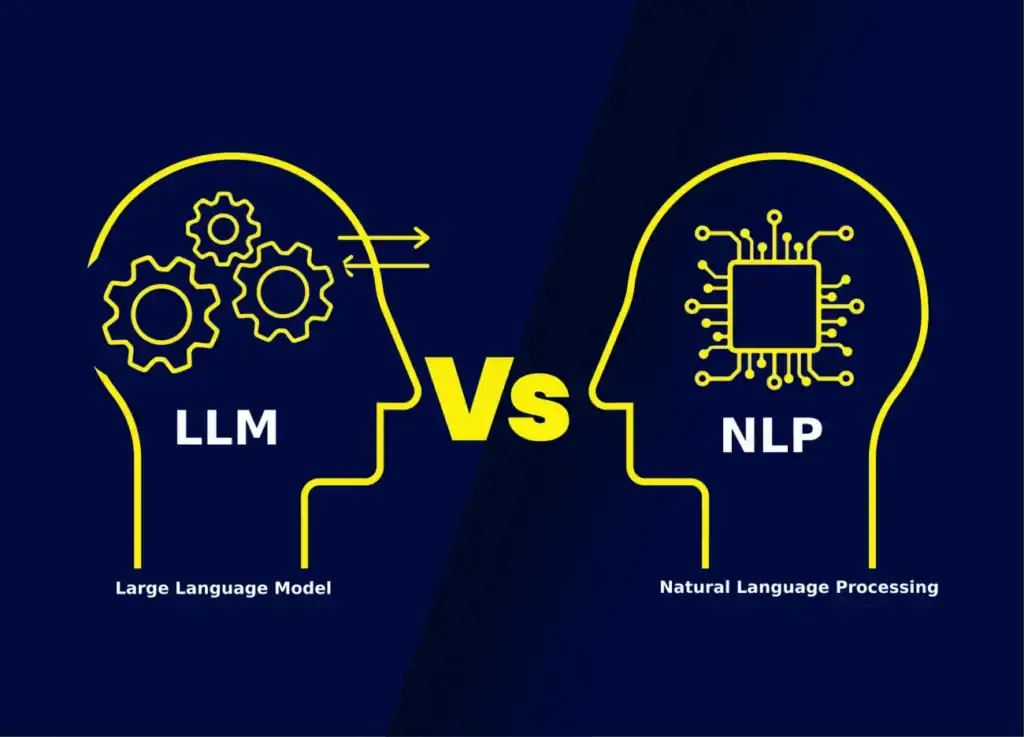
Are you struggling to keep up with the rapid advancements in artificial intelligence, especially when it comes to language? It feels like a new term pops up every week, right? You’ve probably heard of Natural Language Processing (NLP) and Large Language Models (LLMs), and maybe you’re wondering if they’re the same thing or how they relate. It’s a common point of confusion, and I’m here to clear it up for you.
Quick Answer
NLP is the broad field of AI that lets computers understand human language. LLMs are a specific type of advanced NLP model, trained on massive datasets to generate human-like text and perform complex language tasks with remarkable fluency. Think of NLP as the umbrella, and LLMs as a powerful, cutting-edge tool under it.
In exploring the distinctions between Natural Language Processing (NLP) and Large Language Models (LLMs), it’s essential to consider various perspectives on the topic. A related article that delves into the nuances of these technologies can be found at RankUp FAQ, which provides insights into how NLP serves as the foundational technology for LLMs and the implications of their differences in practical applications. This resource can enhance your understanding of the evolving landscape of language technologies.
The Foundation: What is Natural Language Processing (NLP)?
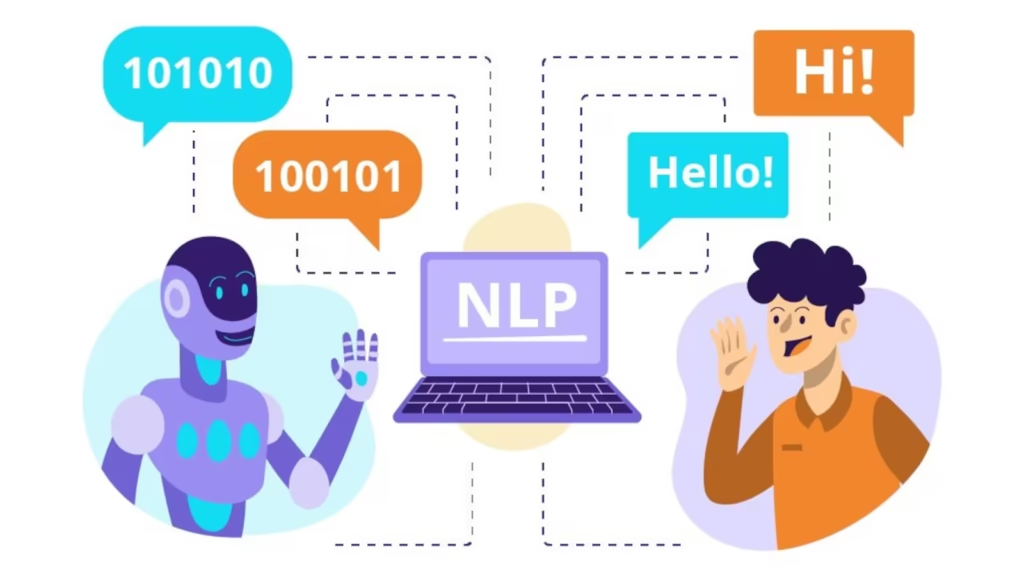
Let’s start with Natural Language Processing (NLP). At its heart, NLP is all about enabling computers to understand, interpret, and generate human language in a way that’s both meaningful and useful. It’s been around for decades, though it’s evolved dramatically. The goal is to bridge the gap between how we humans communicate and how machines process information.
Think about it: we speak, we write, we use nuances, sarcasm, and context. Computers, on the other hand, deal with structured data, binary code. NLP aims to translate that unstructured, messy human language into something a computer can work with. It’s the technology that powers things like voice assistants, spam filters, and translation services.
Key Goals of NLP
NLP tackles several fundamental challenges:
- Understanding Meaning (Semantics): This is about grasping the “what” of a sentence. What is the subject? What is the action? What are the relationships between words? For instance, in the sentence “The bank is on the river bank,” NLP needs to figure out which “bank” refers to a financial institution and which refers to the edge of a river. This is a classic example of word sense disambiguation.
- Understanding Structure (Syntax): This involves analyzing the grammatical structure of sentences. How are words arranged? What are the parts of speech? This is crucial for parsing sentences, identifying subjects, verbs, and objects, and ensuring the overall grammatical correctness.
- Understanding Intent (Pragmatics): This is the most challenging aspect. It’s about understanding the why behind what’s being said or written. What is the speaker’s intention? Are they asking a question, making a statement, giving a command, or expressing an emotion? This taps into subtext and context, which are often implicit.
- Generating Language: This is the flip side of understanding. It’s about creating human-like text or speech. This can range from simple auto-complete suggestions to generating entire essays.
Historically, NLP relied heavily on rule-based systems and statistical methods. Linguists would manually define rules for grammar and syntax. Then, machine learning approaches came into play, using algorithms to learn patterns from data. These were significant advancements, but they often struggled with the sheer complexity and ambiguity of human language.
The Evolution: Where Do LLMs Fit In?
Now, let’s talk about Large Language Models (LLMs). These are a relatively recent and incredibly powerful development within the broader NLP field. As the name suggests, they are large models, meaning they have a massive number of parameters (think of them as tiny knobs that the model adjusts during training to learn). They are also trained on enormous datasets of text and code – think the entire internet, books, articles, and much more.
The key innovation with LLMs is their architecture, often based on a concept called the Transformer. This architecture allows them to process language in a way that preserves context much more effectively than previous methods. They can look at words not just in isolation or in immediate proximity, but across entire sequences, understanding how relationships evolve over longer passages.
Because of their scale and training, LLMs have demonstrated an astonishing ability to perform a wide range of NLP tasks with little to no task-specific training. This is often referred to as few-shot learning or zero-shot learning. You can ask an LLM to summarize a document, translate text, answer questions, write code, or even generate creative stories, and it can often do so with impressive competence, sometimes outperforming highly specialized older NLP models.
So, while NLP is the overarching science, LLMs are a revolutionary toolset within that science. They are not a replacement for NLP; rather, they are a highly advanced implementation of NLP principles.
The Transformer Architecture: A Game Changer
The Transformer architecture, introduced in a 2017 paper, fundamentally changed how we approach sequence modeling, including text. Before Transformers, recurrent neural networks (RNNs) and their variants like LSTMs were common. These processed text sequentially, word by word, which made it difficult to capture long-range dependencies.
Transformers use a mechanism called attention. This allows the model to weigh the importance of different words in the input sequence when processing any given word. For example, when processing the word “it” in the sentence “The cat sat on the mat. It was fluffy,” the attention mechanism can strongly associate “it” with “cat,” understanding the pronoun’s referent. This has been a game-changer for understanding context.
NLP Tasks: What Can They Do?
NLP encompasses a vast array of applications. Many of these have been significantly enhanced by LLMs.
Core NLP Tasks (Often Improved by LLMs)
- Text Classification: Categorizing text into predefined classes. This includes sentiment analysis (is the review positive or negative?), topic modeling (what is this article about?), and spam detection.
- I’ve seen LLMs perform sentiment analysis with incredible nuance, picking up on subtle cues that older methods might miss.
- Named Entity Recognition (NER): Identifying and classifying named entities in text, such as people, organizations, locations, dates, and monetary values. This is vital for information extraction.
- Imagine reading a news article; NER helps pull out all the key players and places involved automatically.
- Part-of-Speech Tagging (POS): Assigning grammatical tags to words (e.g., noun, verb, adjective).
- Syntactic Parsing: Analyzing the grammatical structure of sentences.
- Machine Translation: Translating text from one language to another. LLMs have made significant leaps in translation quality, offering more natural-sounding and contextually aware translations.
- Question Answering (QA): Comprehending a body of text and answering questions based on it.
- This is where LLMs really shine. You can ask complex questions about a document, and they can often extract the precise answer, even synthesizing information from multiple parts of the text.
- Text Summarization: Condensing a long piece of text into a shorter, coherent summary. LLMs can generate abstractive summaries (rewriting in their own words) as well as extractive ones (picking key sentences).
- Speech Recognition: Converting spoken language into text.
- Speech Synthesis (Text-to-Speech): Converting text into spoken language.
LLM-Specific Capabilities (Built on NLP)
LLMs have pushed boundaries beyond traditional NLP tasks, exhibiting emergent capabilities.
- Text Generation: This is perhaps the most well-known capability. LLMs can create human-quality text for various purposes, from casual conversation to creative writing and technical documentation.
- It’s astonishing how fluently an LLM can generate text that reads as if a human wrote it.
- Code Generation: LLMs trained on programming code can generate code snippets, complete functions, or even write entire programs based on natural language descriptions.
- Reasoning and Inference: While not true reasoning in the human sense, LLMs can exhibit impressive capabilities in drawing logical inferences from provided information.
- Creative Writing: Generating poems, scripts, musical pieces, email, letters, etc.
- Conversational AI: Powering chatbots and virtual assistants that can engage in extended, coherent dialogues.
In exploring the distinctions between Natural Language Processing (NLP) and Large Language Models (LLMs), it is essential to understand how these technologies interact and evolve within the field of artificial intelligence. A related article that delves deeper into the nuances of these concepts can be found at this link, which provides valuable insights into the applications and implications of both NLP and LLMs in various domains. By examining their differences and similarities, readers can gain a clearer perspective on how these tools shape communication and understanding in the digital age.
The Relationship: An Analogy
To really nail this down, let’s use an analogy.
Think of NLP as the entire field of biology. Biology is a vast area of study that encompasses everything from understanding cells and genetics to studying entire ecosystems and the evolution of life.
Now, think of LLMs as a specific, incredibly powerful microscope or gene sequencing machine that has revolutionized our understanding and capabilities within biology. This advanced tool allows biologists to discover things they couldn’t even imagine before, perform experiments with unprecedented precision, and analyze data in entirely new ways.
You wouldn’t say biology is a microscope, would you? Similarly, NLP is not an LLM. LLMs are a cutting-edge technology within NLP. They leverage NLP principles but do so on a scale and with a sophistication that has dramatically advanced the field.
Breaking Down the Analogy:
- NLP (Biology): The broad scientific discipline aiming to understand life.
- LLMs (Advanced Tools like Microscopes/Sequencers): Powerful tools that enable new discoveries and capabilities within that discipline.
- Traditional NLP Methods (Older Tools/Techniques): Like early microscopes or dissection tools – useful, but less powerful than the latest advancements.
Technical Depth: How LLMs Work (Simplified)
I’ve found that understanding a bit about how LLMs work can really solidify the distinction.
LLMs are typically built using deep learning techniques, specifically neural networks. As I mentioned, the Transformer architecture is central. Let’s simplify that.
Imagine you have a sentence, say: “The fluffy cat chased the red ball.”
- Tokenization: First, the sentence is broken down into smaller units called tokens. These could be words or parts of words. So, “The”, “fluffy”, “cat”, “chased”, “the”, “red”, “ball” become our tokens.
- Embedding: Each token is then converted into a vector – a list of numbers. This vector represents the token’s meaning in a way the computer can understand. Words with similar meanings will have similar vectors. This is like assigning coordinates on a very abstract map of meaning.
- Self-Attention: This is where the Transformer shines. For each token, the model looks at all other tokens in the input. It calculates an “attention score” for each pair of tokens, measuring how related they are. For “chased,” it might pay high attention to “cat” (the doer) and “ball” (the object). This allows it to understand dependencies across the entire input, not just nearby words.
- Feed-Forward Networks: After attention, there are layers of standard neural networks that process this information further, refining the understanding of each token in context.
- Learning from Data: The magic happens during training. The model is fed massive amounts of text. It learns to predict the next word in a sequence. For example, if it sees “The fluffy cat chased the red…”, it learns that “ball” is a highly probable next word. By doing this billions of times across trillions of words, it develops an incredible understanding of grammar, facts, reasoning patterns, and styles.
- Generation: When you prompt an LLM, it uses this learned knowledge. It takes your prompt, processes it through the Transformer layers, and then starts predicting the most probable next token, then the next, and so on, stringing them together to form coherent responses.
In contrast, traditional NLP methods might have used N-grams (sequences of N words), hidden Markov models, or vector space models that were less adept at capturing long-range contextual relationships as effectively as Transformers can. They often required more manual feature engineering.
LLMs, by being so large and trained on so much data, can perform a broad range of NLP tasks (like sentiment analysis or NER) without being specifically trained for each one. They’ve internalized so much about language that they can often generalize their knowledge.
The Future: Synergistic Evolution
It’s exciting to think about where this is headed. It’s not a case of one replacing the other, but rather a synergistic evolution.
LLMs are, in essence, the pinnacle of current NLP development. They are accelerating progress across the entire field. New NLP research and applications will undoubtedly build upon the LLM paradigm, pushing the boundaries even further.
The ability of LLMs to understand and generate human language with such fluency opens up new possibilities for how we interact with technology and information. Imagine more intuitive interfaces, personalized education platforms, advanced scientific discovery tools, and more accessible communication.
I believe we’ll see LLMs integrated more deeply into existing NLP pipelines, acting as powerful engines for understanding and generating language within larger systems. For instance, a sophisticated customer service chatbot might use an LLM for natural conversation, but still rely on more traditional NLP techniques for specific tasks like routing a complex query to the correct department based on precise keyword identification.
The key takeaway is that NLP is the expansive field, and LLMs are a groundbreaking set of tools within that field. You can’t have LLMs without the foundational principles of NLP, but LLMs are dramatically changing what’s possible within NLP.
Next Step for You:
Explore a specific LLM platform like ChatGPT or Bard and try asking it a few complex questions about a topic you know well to see its understanding and generation capabilities firsthand. Then, consider how this technology could be applied to a problem or task you encounter in your daily work or hobbies.
FAQs
What is Natural Language Processing (NLP)?
Natural Language Processing (NLP) is a field of artificial intelligence that focuses on the interaction between computers and humans through natural language. It involves the development of algorithms and models that enable computers to understand, interpret, and generate human language in a valuable way.
What are Large Language Models (LLMs)?
Large Language Models (LLMs) are a type of artificial intelligence model that uses machine learning techniques to understand and generate human language. These models are trained on vast amounts of text data and are capable of performing a wide range of natural language processing tasks, such as language translation, text summarization, and question answering.
What are the key differences between NLP and LLMs?
The key difference between NLP and LLMs lies in their scope and functionality. NLP is a broader field that encompasses the development of algorithms and models for natural language understanding and processing, while LLMs specifically refer to a type of language model that uses machine learning techniques to process and generate human language.
How are NLP and LLMs used in real-world applications?
NLP and LLMs are used in a wide range of real-world applications, including language translation, chatbots, sentiment analysis, text summarization, and speech recognition. These technologies are also used in industries such as healthcare, finance, customer service, and education to automate tasks and improve communication.
What are some popular examples of NLP and LLMs in use today?
Some popular examples of NLP and LLMs in use today include Google’s BERT (Bidirectional Encoder Representations from Transformers), OpenAI’s GPT-3 (Generative Pre-trained Transformer 3), and Microsoft’s Azure Cognitive Services, which offer a range of natural language processing capabilities for developers and businesses.